“Microbiome” is a trending word in the world of skincare. As professionals, it is important to understand not just what this means, but how to restore balance and offer practical solutions for our clients.
What is a Microbiome?
Our bodies are absolutely crawling with microorganisms – and before you jump in the shower and start scrubbing, they are not only beneficial to us, but this ecosystem of microorganisms that live both on and in us is essential. We couldn’t live without them!
There are communities of microorganisms in many different areas of our body but the key one that we are concerned about when it comes to skincare is, of course, the skin microbiome, in particular, the face and neck area.
The microbiota found on the skin include bacteria, fungi, viruses, and mites. The skin itself is a fantastic barrier and is able to tell which microorganisms are harmful and deal with them accordingly. Our helpful bacteria also play a role in the immune response, signalling skin cells to repair, inhibiting inflammation, and other essential processes needed for maintaining skin health. There are many skin diseases associated with a disrupted or altered microbiome, the most well-known being acne due to an abundance of the bacteria P. acnes.
A Delicate Balance
An imbalance in the skin microbiome is known as dysbiosis. It can be impacted by a variety of factors including climate, cosmetic products, hygiene practices, and UV exposure. When our delicate microbial ecosystem becomes unbalanced, the good bacteria can’t defend our skin as effectively and the skin barrier becomes compromised – demonstrating how important a balanced microbiome is in protecting the skin from dehydration and ageing.
Not only can an excess of certain bacteria lead to skin diseases like acne and atopic dermatitis, but a disbalance can accelerate ageing due to an increase in systemic inflammation.
One of the core problems that dysbiosis can result in is inflammation. Inflammation can result in a cascade of other issues and this cycle is difficult to break out of. Furthermore, common skin diseases including Atopic Dermatitis, Acne, Psoriasis, and Rosacea have all been linked to an imbalance in the microbiome and associated inflammation.
As new studies continue to shed light on the importance of the skin microbiome, it is becoming clear that there is a link between a balanced microbiome and skin ageing.
What Can Impact the Skin Microbiome?
There are many things that impact the balance of microbes on the skin. Both internal and external factors can disrupt this complex ecosystem.
- Pollution: Pollutants such as heavy metals are known to cause oxidative stress, which can lead to an imbalance in the skin microbiome. Oxidative stress and the microbiome are interlinked with a negative impact on one also impacting the other.
- High levels of air pollution results in the overgrowth of pathogenic microbes, compromising the integrity of the skin barrier.
- UV Exposure: UVB radiation is the most harmful. Sunburns cause damage to the epidermal barrier, oxidative stress, and inflammation. While the skin would normally defend itself with an immune response, UV radiation can supress the immune system and impact the skin’s ability to defend and repair itself as effectively.
- Harsh Soaps & Cosmetics: Overusing products with high pH levels or strong disinfectants can reduce the amounts of both good and bad microbes. Disruptive soaps can strip away protective oils, dehydrate the skin, and create an environment where harmful bacteria can thrive.
- Ageing: The skin microbiome changes as we age. Altered skin pH, decreased sebum production, and thinner skin all contribute to an environment where pathogenic microbes can grow more effectively. Photoageing alters the microbiome further, allowing species associated with dry, less resilient skin to develop.
Restoring Balance
Probiotics, prebiotics, and postbiotics can be used to reduce the signs of ageing and support overall skin health.
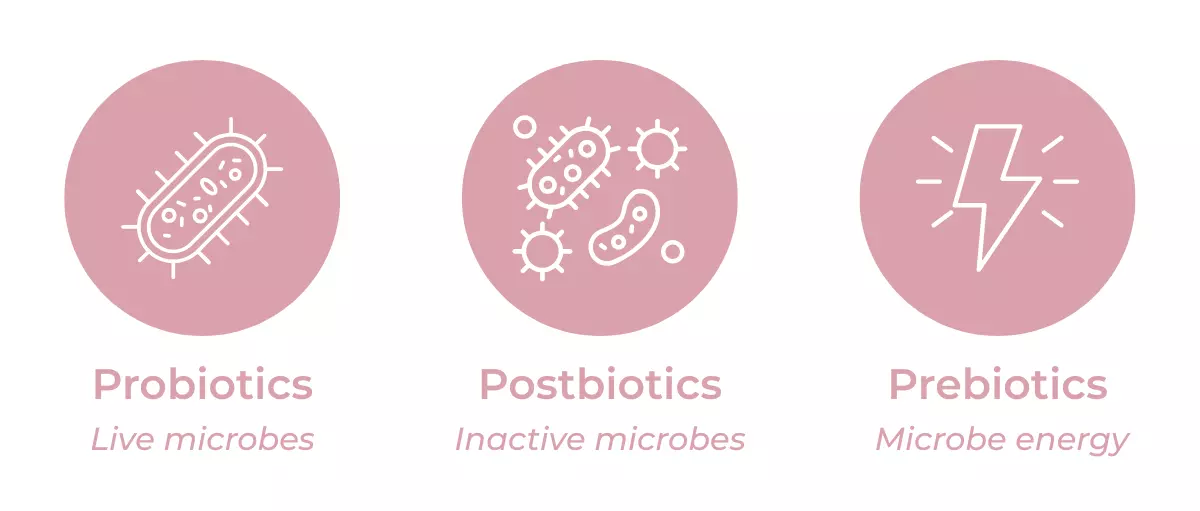
A quick (and simplified!) guide to the three “biotics”.
- Probiotics: Live microorganisms that are beneficial to us.
- Most common species are Lactobacillus, Bifidobacterium, and Streptococcus.
- Postbiotics: Inactive microorganisms (or their components) usually made from probiotics.
- The most common postbiotics are the same as probiotics – they are just inactive or dead versions of the same bacteria.
- Prebiotics: A food source for the good bacteria.
- These are fermented components and the most commonly known prebiotics are oligosaccharides and complex polysaccharides.
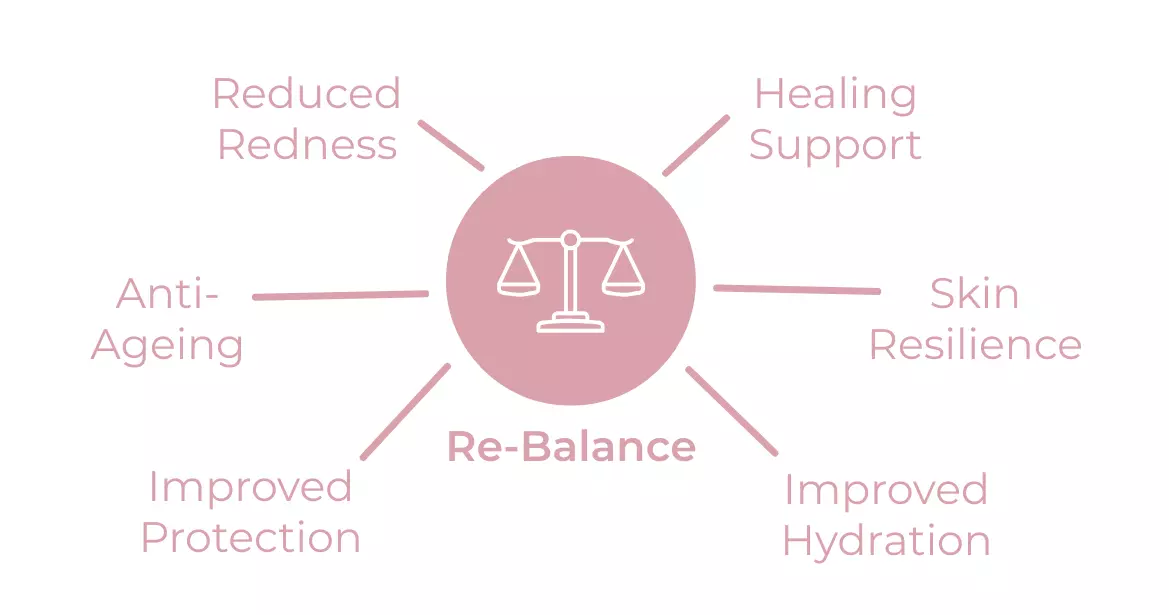
Topical pro, post, and prebiotics support in the restoration of the skin barrier, reducing trans-epidermal water loss, assisting wound healing, and may also stimulate the production of collagen. They do this by controlling harmful bacteria and boosting the growth of beneficial ones. Some can also help to manage skin inflammation as they can stimulate the immune system. As a result, skin ageing is minimised and the skin stays looking younger for longer.
Probiotics can be very beneficial but are difficult to keep stable and live microorganism-based products must meet strict criteria (which vary around the world) as there are safety concerns about contamination and infection potential. There is also the possibility of unintentionally disrupting the skin microbiome by introducing unnecessary live microbes and prompting further issues. Pre and postbiotics offer great skin benefits without any of these issues, making them ideal for use in cosmetics. They are both stable, safe, and effective.
Studies into pre, post, and probiotics have demonstrated their potential for wound healing, improving skin sensitivity, anti-ageing, brightening, and skin protection. Topical skincare products still need further research, microbiome balancing cosmeceuticals appear to be an effective potential approach for skin sensitivity and anti-ageing.
Supporting the Microbiome as a Professional
While skin conditions like acne, eczema, atopic dermatitis, and similar issues should always be dealt with by a relevant qualified professional, re-balancing products and treatments are a great way for beauty professionals to offer skin support to combat the signs of ageing and more general skin concerns. The following skin concerns are examples of when you might consider microbiome-based treatments. When working with any client, you should always complete a thorough consultation and ultimately use your professional judgement.
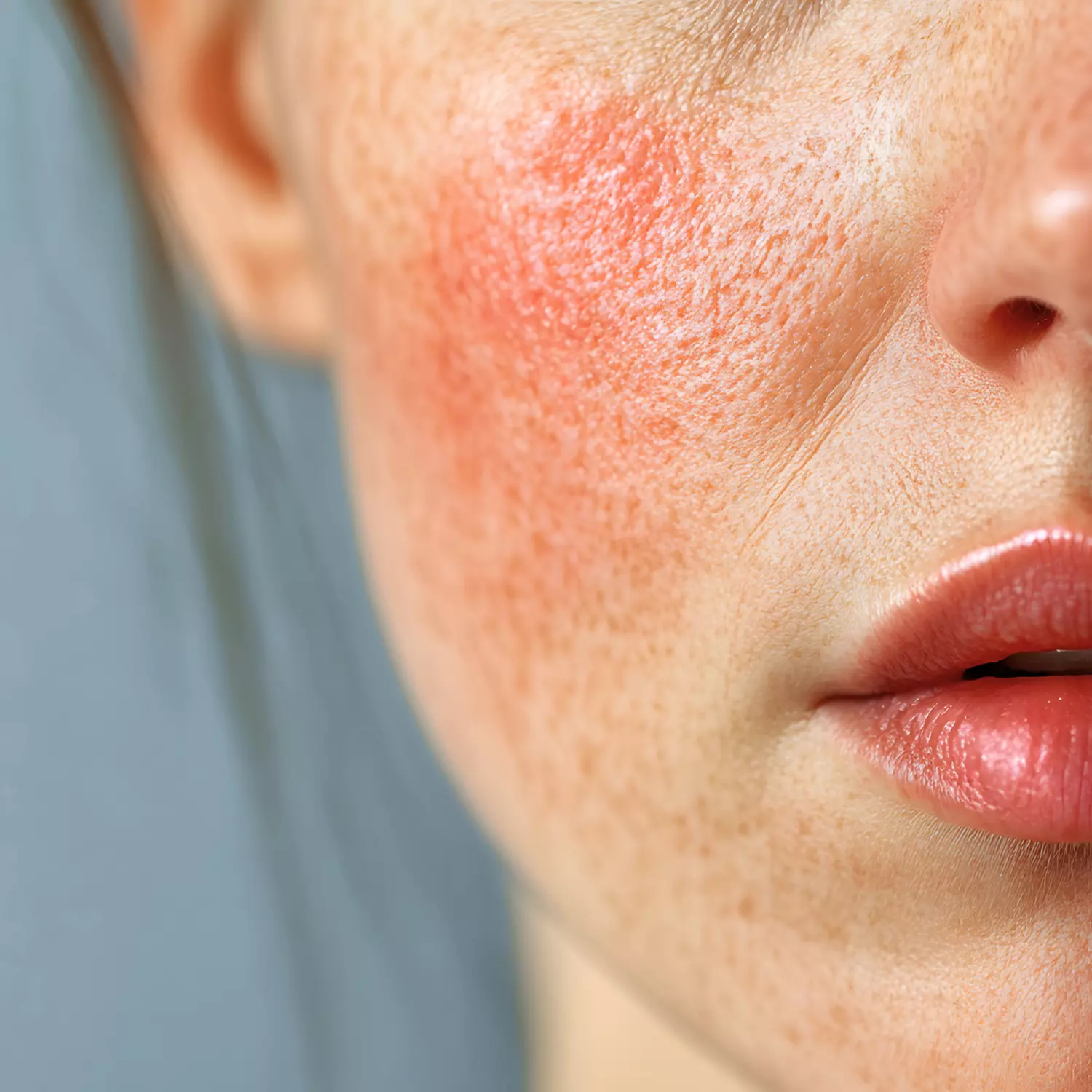
Sensitive skin has been linked to a disrupted skin barrier, and the introduction of gentle microbiome balancing products and treatments may help improve skin health, reduce redness and inflammation, and reduce sensitivity. A series of gentle in-salon treatments and a complimentary home care routine may be ideal for clients looking to ease redness and improve their skin tolerance.
Following aesthetic treatments, microbiome-based skincare can help to both soothe the skin and encourage healing. As there has not yet been much research into the use of pre, post, and probiotics on broken skin, this should be avoided. Introducing a balancing home skincare and a few professional in-salon treatments can be used to support skin recovery after treatments such as microneedling, chemical peels, and spicule-based peels.
Ageing skin often suffers from decreased microbiome diversity and impaired barrier function, leading to dehydration, wrinkles, and accelerated skin ageing. There are a few approaches that many clients can benefit from.
Preventative – Before the skin begins to show signs of ageing, offering a couple of microbiome supporting home care products can help to keep the skin in good condition and combat ageing before it even appears. During times of skin stress, such as redness in cold weather, calming and balancing facials can help to limit the impact this will have on skin ageing.
Early Signs – As the first wrinkles start to show, consider offering regular clients a microbiome-based facial every few treatments. Home care can also be upgraded with additional products.
Mature Skin – Alternating balancing facials with specific anti-ageing facials can be highly beneficial in reducing the appearance of wrinkles and fine lines, as well as revitalising dull and dehydrated skin.
References
Grice, E.A. and Segre, J.A. (2011). The skin microbiome. Nature Reviews Microbiology, [online] 9(4), pp.244–253. doi:https://doi.org/10.1038/nrmicro2537.
https://pmc.ncbi.nlm.nih.gov/articles/PMC3535073/
Mim, M.F., Sikder, M.H., Chowdhury, Md.Z.H., Bhuiyan, A.-U.-A., Zinan, N. and Islam, S.M.N. (2024). The dynamic relationship between skin microbiomes and personal care products: A comprehensive review. Heliyon, [online] 10(14), p.e34549. doi:https://doi.org/10.1016/j.heliyon.2024.e34549.
https://www.sciencedirect.com/science/article/pii/S2405844024105804
Hong, J.Y., Kwon, D. and Park, K.Y. (2025). Microbiome-Based Interventions for Skin Aging and Barrier Function: A Comprehensive Review. Annals of Dermatology, 37. doi:https://doi.org/10.5021/ad.25.009.
https://www.anndermatol.org/DOIx.php?id=10.5021/ad.25.009
Atallah, C., Ayline El Abiad, Abiad, M.E., Mantoura Nakad and Assaf, J.C. (2025). Bioengineered Skin Microbiome: The Next Frontier in Personalized Cosmetics. Cosmetics, [online] 12(5), pp.205–205. doi:https://doi.org/10.3390/cosmetics12050205.
https://www.mdpi.com/2079-9284/12/5/205
Theodorou, I.M., Kapoukranidou, D., Theodorou, M., Tsetis, J.K., Alexandra Eleftheria Menni, Georgios Tzikos, Bareka, S., Shrewsbury, A., Stavrou, G. and Katerina Kotzampassi (2024). Cosmeceuticals: A Review of Clinical Studies Claiming to Contain Specific, Well-Characterized Strains of Probiotics or Postbiotics. Nutrients, [online] 16(15), pp.2526–2526. doi:https://doi.org/10.3390/nu16152526.
https://www.mdpi.com/2072-6643/16/15/2526
Ji, J., Jin, W., Liu, S., Zhang, J. and Li, X. (2023). Probiotics, prebiotics, and postbiotics in health and disease. MedComm, 4(6). doi:https://doi.org/10.1002/mco2.420.
https://pmc.ncbi.nlm.nih.gov/articles/PMC10625129/
Ju Hee Han and Hei Sung Kim (2024). Skin Deep: The Potential of Microbiome Cosmetics. Journal of microbiology, 62. doi:https://doi.org/10.1007/s12275-024-00128-x.
https://www.jmicrobiol.or.kr/upload/pdf/jm-62-3-181.pdf