

Choosing the right needle (or probe) is essential for maximising results and client comfort. Let’s take a closer look at two of the key Pro-Tec electrolysis needles used by professionals worldwide.
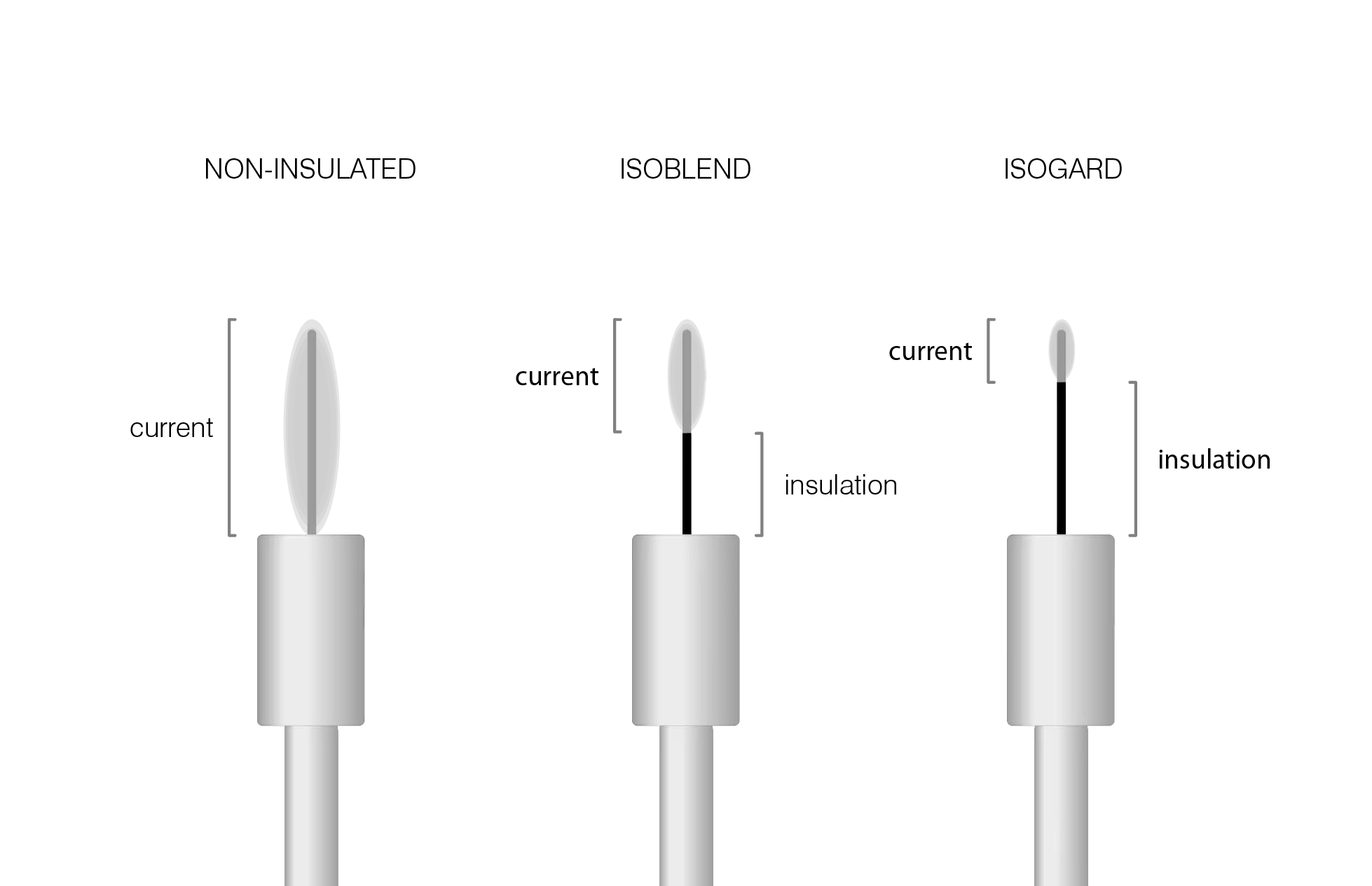
Both the IsoGard and IsoBlend models are insulated but have different lengths of the needle covered. As you can see, the IsoBlend is insulated approximately half of the way down the probe, whereas the IsoGard has about ¾ covered, leaving just the tip exposed.
IsoGard
As the non-insulated section of the needle is minimal, all of the energy is concentrated at the tip. This type of probe is ideal for superficial insertions with fast thermolysis modalities, such as PicoFlash, MicroFlash, MultiPlex, or Synchro. This type of probe is also a good choice if you practice the double pulse technique.
IsoBlend
These versatile needles can be used for both thermolysis and blend modes. The larger non-insulated area allows for the creation of caustic soda (lye) when using combined currents, while also protecting the skin’s surface. This makes IsoBlend ideal for treating deeper hairs.
Why Insulated?
Insulated needles help to protect the surface of the skin and can reduce the instances of side effects such as scabbing and dark spots. The controlled application of energy to the base of the follicle keeps diffusion of heat into the surrounding tissues to a minimum. Unlike non-insulated needles, this precision minimises any heat reaching the skin’s surface, which can result in discomfort or damage. This also makes the treatment much more easily manageable for clients with particularly sensitive skin.
Pro-Tec found that using insulated IsoGard and IsoBlend needles resulted in 17% faster treatments and 33% less regrowth. As these probes concentrate the energy at the base of the hair, where the germ cells are located, follicle destruction is ultimately more efficient.
With good insertion technique, insulated needles help to improve the overall results and client experience.


